
Early Publication of Patents in India: How Startups Can Get Their Patent Application Published Faster
In India, every patent application is eventually published—but by default, this happens only 18 months after the filing or priority date. For a startup racing against time, waiting that long can feel like an eternity.
The good news? Indian patent law allows you to request early publication, which can cut down that waiting period drastically. This means your invention becomes visible to the public sooner, giving you strategic advantages in funding, partnerships, and market positioning.
Here’s how it works, why it matters, and how startups can benefit. Patent my idea will explore everything in this post.
What Is Early Publication of a Patent Application?
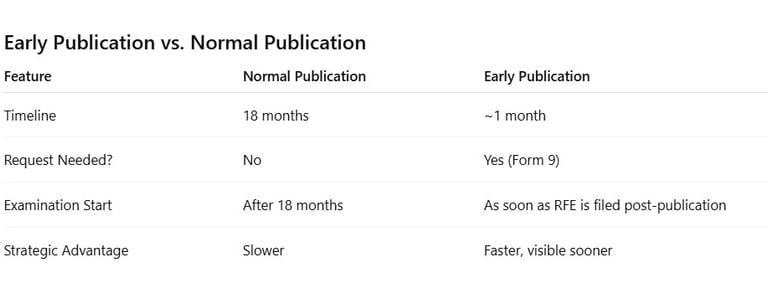
Under the Indian Patents Act, 1970, all applications (except those filed with secrecy directions) are published in the Patent Office Journal after 18 months.
However, by filing a request for early publication (Form 9), applicants can have their application published within one month of the request being filed.
Why Early Publication Matters for Startups
Investor Confidence – Investors like to see progress in IP. A published application signals that your startup is serious about protecting innovation.
Market Signaling – Competitors and partners can see your application earlier, which can deter copycats or attract collaborators.
Faster Examination – A patent cannot be examined until it is published. By publishing early, you can also kickstart the Request for Examination (RFE) process sooner.
Potential Licensing Opportunities – Publication makes your invention public, opening doors for licensing deals even before grant.
How to Apply for Early Publication
Step 1: File Your Patent Application
Submit either a provisional specification (followed by complete within 12 months) or a complete specification.
Step 2: File Form 9 (Request for Early Publication)
Submit Form 9 along with the prescribed fee to the Indian Patent Office.
Step 3: Wait for Publication
The Patent Office will publish your application in the Patent Journal within one month of receiving the request.
👉 Note: Once published, your application is irrevocably in the public domain—it cannot be withdrawn from publication.
Who Should Opt for Early Publication?
Startups seeking investment – Demonstrates progress in IP strategy.
Companies entering competitive markets – Early disclosure can establish a defensive position.
Applicants seeking expedited examination – Since examination starts only after publication, early publication speeds up the entire timeline.
Common Mistakes to Avoid
Forgetting that publication = public disclosure (trade secrets are lost once published).
Filing early publication before finalizing claims—leading to weaker protection.
Assuming early publication = faster grant. It only accelerates the process up to examination; you still need to respond to objections.
Final Thoughts
For startups, early publication of patents in India is more than a procedural shortcut—it’s a strategic tool. It accelerates visibility, builds credibility with investors, and speeds up the examination process.
If your idea is ready and your strategy demands speed, filing Form 9 for early publication could be the smartest next step.