How to File a Patent in India: A Step-by-Step Guide for First-Time Inventors
Filing a patent is a critical milestone for any inventor. In India, the patent system protects your innovation while giving you exclusive rights to use, license, or sell your invention. For first-time inventors, however, the patent application process can feel intimidating. This guide breaks it down step by step—so you understand the procedure, costs, and pitfalls to avoid. Patent my idea will explore everything in this post.
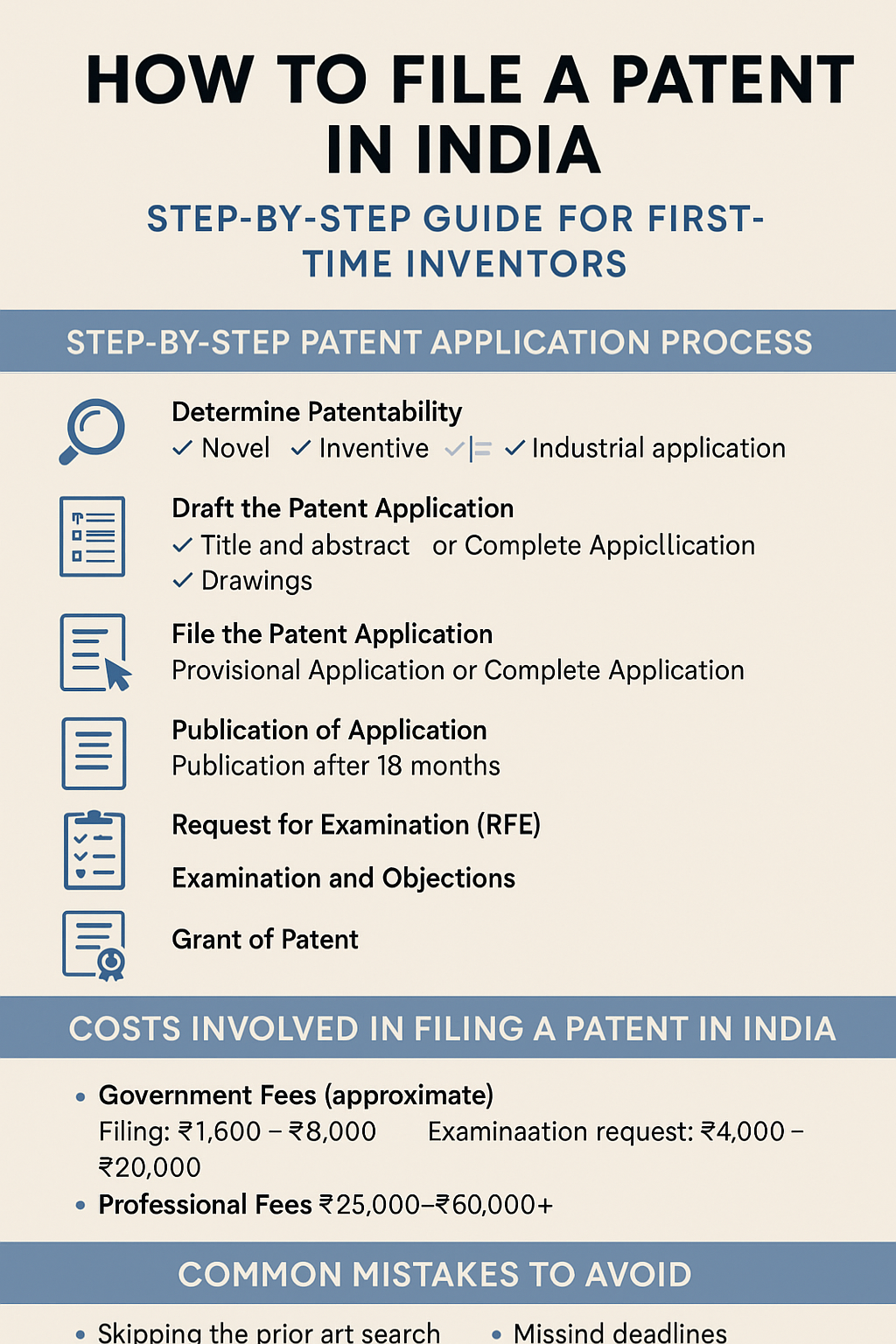
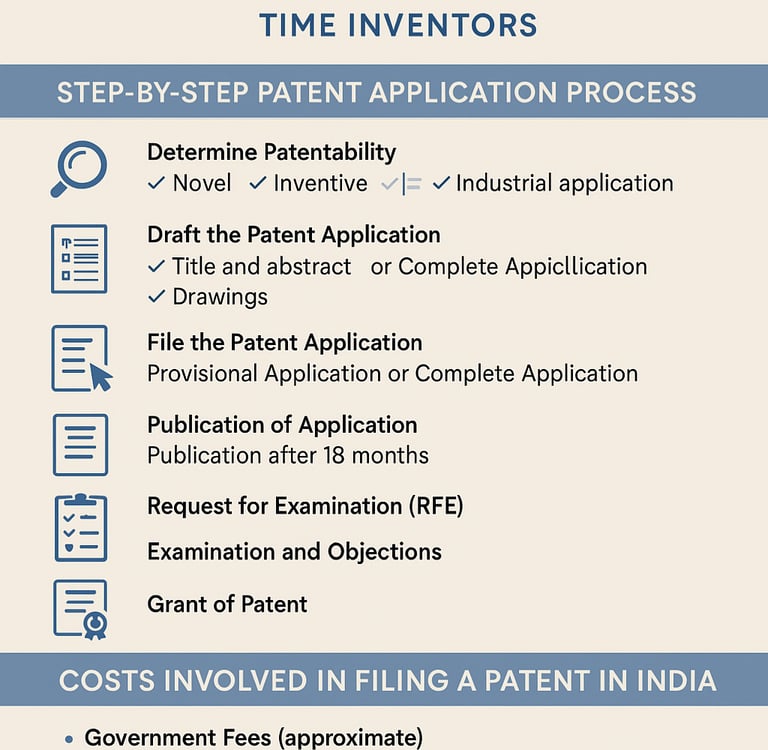
Step-by-Step Patent Application Process in India
1. Determine Patentability
Not every idea is patentable. Your invention must be:
Novel (new and not published anywhere)
Inventive (not obvious to others in the field)
Industrial application (capable of being used in an industry)
A prior art search—checking existing patents and publications—is strongly recommended before filing.
2. Draft the Patent Application
This is the most technical part. A patent application includes:
Title and abstract
Detailed description of the invention
Claims (the legal scope of protection)
Drawings (if applicable)
Professional drafting is advised, as poorly written claims can weaken your protection.
3. File the Patent Application
You can file either:
Provisional Application: Gives you a priority date and 12 months to file the complete specification.
Complete Application: Full details of your invention.
Applications are filed with the Indian Patent Office (IPO) online or physically.
4. Publication of Application
The IPO publishes your application after 18 months from the filing date. You may request early publication to speed up the process.
5. Request for Examination (RFE)
Your application won’t be examined automatically. You must file an RFE within 48 months of the priority date.
6. Examination and Objections
A patent examiner reviews your application and may raise objections. You (or your patent agent) must respond with clarifications or amendments.
7. Grant of Patent
If objections are resolved, your patent is granted and published in the Patent Journal. The term of protection in India is 20 years from the filing date.
Costs Involved in Filing a Patent in India
Patent filing costs vary depending on the type of applicant (individual/startup vs. company) and professional fees.
Government Fees (approximate):
Filing a patent application: ₹1,600 (individuals/startups), ₹8,000 (companies)
Examination request: ₹4,000 (individuals/startups), ₹20,000 (companies)
Professional Fees: Patent agents typically charge ₹25,000–₹60,000+ for drafting and filing, depending on complexity.
Additional Costs: Early publication, amendments, and responses to objections may add to expenses.
Common Mistakes to Avoid
Skipping the prior art search: Leads to wasted time and money on unpatentable ideas.
DIY drafting: Without expert help, claims may be too weak or too broad.
Missing deadlines: Patent law is deadline-driven; delays can cause loss of rights.
Not filing a provisional: Many inventors disclose their idea too early without securing a priority date.
Secure Your Innovation with Expert Help
Filing a patent in India can be a game-changer for your invention—but the process is complex. Working with an experienced patent consultant ensures your application is strong, compliant, and strategically valuable.
Need clarity on your patent journey? Book a consultation today and protect your innovation with confidence.